
Frontier
S.Lyudkevych Concert Hall
250-800
“In arte vera libertas. In art lies the only true freedom.”
Adam Mickiewicz
Freedom forms the living core of the concert Frontier, an evening in which music transforms historical borders into a shared space of community, dialogue and remembrance.
At a time when Ukraine once again stands at its own frontier, at the threshold where the future of freedom is being decided, the music of three composers emerges as a voice of dignity, inner strength and spiritual independence. Karol Lipiński, Borys Liatoshynskyi and Grażyna Bacewicz belong to different centuries, yet they share a profound understanding of art as a realm of truth that cannot be silenced. Their lives and ideas are connected through the figure of Adam Mickiewicz. Lipiński met the poet in 1835 and envisioned an opera inspired by revolution. Liatoshynskyi read Grażyna as an ethical reflection on service and devotion. Bacewicz carried the name of Mickiewicz’s heroine as a quiet compass vitae, a guiding presence throughout her life.
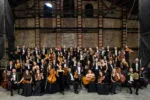
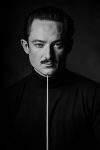
Karol Lipiński’s Violin Concerto No. 2, widely known as Concerto Militaire, will be heard in Lviv almost two centuries after its London premiere. When the work first appeared in 1836, Poland was still living through the dramatic aftermath of the November Uprising. Lipiński’s music became a voice for a nation whose expression was being suppressed. The solo part will be performed by the Polish violinist Jakub Jakowicz, a virtuoso and a subtle interpreter whose refined artistry and deep sense of style illuminate both the energy and the noble character of the concerto. It is noteworthy that the orchestra acquired the performing rights and the score shortly before the full scale invasion of Ukraine. Only now will this music finally be presented to the public.
Borys Liatoshynskyi’s Symphony No. 1 was created in Kyiv during a time of profound historical turbulence marked by wars, revolutions and uncertainty. Within this score one senses the emerging force of Ukrainian modernism, a light breaking through chaos and a powerful striving toward truth. Even amid historical darkness the music preserves a firm commitment to inner integrity.
The evening concludes with the Overture by Grażyna Bacewicz, a work of vitality and action composed in 1943 during one of the darkest chapters of European history. Its clarity of form, resilient rhythm and concentrated energy become a gesture of artistic resistance. The friendship and correspondence between Bacewicz and Liatoshynskyi, together with their shared presence in the cultural life of Europe, remind us that culture has the power to create bridges where politics often builds walls.
This concert offers a musical map of the Ukrainian and Polish cultural landscape where art becomes a language of understanding, responsibility and freedom. It is also a space in which culture restores connections where history once drew dividing lines. The cultural frontier between Ukraine and Poland has long been a place where the histories of two nations have unfolded side by side through trials, traumas and prohibitions, yet it has also given rise to deep bonds, solidarity and mutual support.
We invite you to become part of an evening in which music opens new perspectives on history and reminds us that the heart of culture never falls silent.