
ALMA
S.Lyudkevych Concert Hall
250–800
Alma mater. Alma musica. Alma memoria
Performers
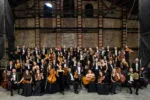
• INSO-Lviv Symphony Orchestra
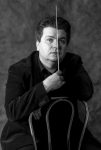
• Oleksandr Gordon, conductor (Austria, Switzerland)
Program
• Maksym Berezovsky — Symphony No. 1
• Felix Mendelssohn — String Symphony No. 5
• Felix Mendelssohn — String Symphony No. 10
• Felix Mendelssohn — Scherzo from A Midsummer Night’s Dream
• Johannes Brahms — Symphony No. 2
Spring gently invites us to return to ourselves, to pause within our own rhythm, to listen inwardly and rediscover a sense of inner grounding. In such a state, perception becomes more refined, new neural connections emerge, and listening opens into a deeper and more authentic dimension. When doubt appears, it often marks the very point where it is worth allowing oneself to come closer and experience more than expected.
The evening opens with Maksym Berezovsky, known in Italy as Massimo Berezovsky, a composer from Hlukhiv whose artistic path unfolded at the very heart of European musical thought. He was closely connected to Padre Martini, one of the most influential theorists of his time, and became one of the most distinguished graduates of the Bologna Philharmonic Academy, where his name was inscribed in gold. His recognition, however, unsettled Catherine II, who after his death oversaw the destruction of many of his manuscripts.
Particular resonance in this program carries his Symphony in C major, rediscovered in the twentieth century and recognized as the first Ukrainian symphony. It stands as a point of origin for Ukrainian symphonic thinking, its own kind of alma mater. Here Berezovsky reveals himself through the clarity and balance of the Enlightenment, through a music that affirms life, radiates light, and speaks with emotional openness and inner harmony. Its luminous character earned him the evocative name of the Ukrainian Mozart.
Felix Mendelssohn, whom Robert Schumann described as the most lucid musical mind of his time, began composing at an early age. His string symphonies belong to this formative period, tracing a delicate evolution from the structural clarity of divertimento toward the emergence of a distinctly Romantic symphonic language.
The Scherzo from A Midsummer Night’s Dream unfolds a different sound world altogether. It exists almost beyond material weight, airy and elusive, where timbre and motion create a sense of fleeting, fairy-like presence, revealing the orchestra as a medium of imagination.
Johannes Brahms long hesitated before entering the symphonic genre, acutely aware of Beethoven’s legacy. His First Symphony took decades to complete, while the Second came into being over the course of a single summer. It carries a sense of calm that holds within it a quiet depth and inner tension. Brahms himself referred to it as a “charming monster,” while his contemporaries heard in it images of blue skies, flowing water, and light. It is music shaped by balance, by a natural sense of order, and remains one of the most refined achievements of mature Romantic symphonism.
This spring, the INSO Co-creation Academy returns for the second time as a space where music becomes formative and the orchestra offers a way of being within art itself. It is an invitation to arrive, to listen, and to carry forward an experience that continues to resonate and gently transform the texture of everyday life.