
Bach. Dialogues of Virtuosos
Концертний зал Людкевича
220–550
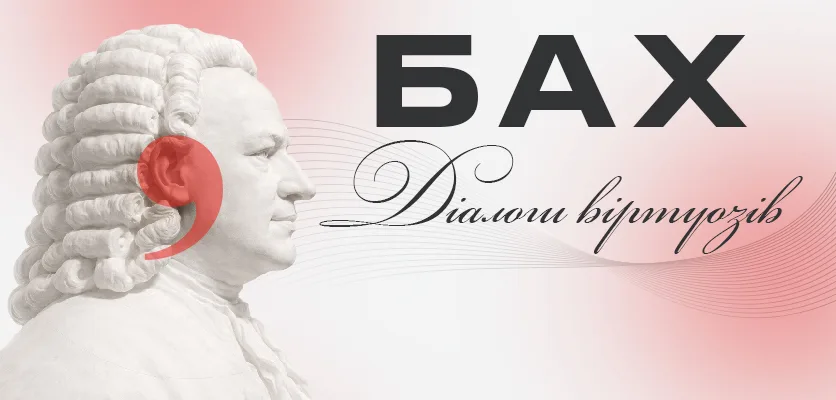
Performers:
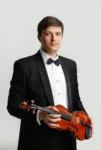
- Mykola Haviuk, violin
- Stepan Syvokhip, oboe
- Violina Petrychenko, piano
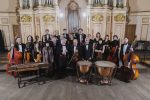
- Academic Chamber Orchestra Virtuosos of Lviv
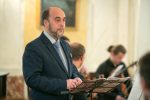
- Volodymyr Syvokhip, conductor
Program:
Johann Sebastian Bach
-
Concerto for Oboe, Violin, and Chamber Orchestra in D minor, BWV 1060R
-
Brandenburg Concerto No. 3 in G major, BWV 1048
-
Aria from Orchestral Suite No. 3 in D major, BWV 1068
-
Piano Concerto No. 1 in D minor, BWV 1052
Around 1700, the musical world was swept by a wave from the south. Vivaldi’s solo concertos crossed the Alps and caused a sensation throughout German-speaking Europe. Bach was not merely captivated — he dissected the form into its details and reassembled it. In Weimar and Köthen, he composed for outstanding performers, including himself.
The Concerto for Oboe and Violin in D minor has reached us in a version for two harpsichords. In the 19th century, when the original was valued more highly than arrangements, Wilhelm Rust in 1874 suggested the existence of a version for two violins. Later, amateur physicist Voldemar Voigt proposed a version for violin and oboe. In this arrangement, each instrument fully exploits its own timbre.
Interestingly, keyboard concertos came into fashion late. Even Vivaldi, who wrote concertos for nearly every instrument, including quieter ones like the lute, never composed specifically for harpsichord. Bach was one of the first. His keyboard concertos are most likely reworkings of pieces originally written for other instruments. For example, the D minor Concerto, BWV 1052, shows how thoroughly Bach studied Vivaldi.
March 1721: Bach sends from Köthen to Berlin a manuscript titled “Six Concertos for Various Instruments”, dedicated to Christian Ludwig, Margrave of Brandenburg-Schwedt. In the preface, Bach noted that he had “played for the Margrave several years ago” and promised to send “some of his compositions.” This likely occurred during a visit to Berlin in March 1719, when Bach went to the Prussian capital to acquire a new harpsichord for the court in Köthen.
The Third Brandenburg Concerto stands out for its unusual form and instrumentation. There is no distinction between solo and ensemble instruments: all strings play both solo and tutti.
The absence of a full slow movement is striking. Two fast movements are separated by an Adagio of a single measure — only two long chords, a cadence as a transition, and a brief pause for rest.
For balance and emotional equilibrium, the Aria from the Third Orchestral Suite will be performed, radiating the style and atmosphere of Lully’s dance music at the court of Louis XIV. This piece brought the suite worldwide fame, thanks to the subtle interplay of instruments, offering the listener moments of pure, contemplative beauty.