
Lighthouse
Концертний зал Людкевича
250–800
“A true flight of the spirit, like a true flight of the body, knows no borders and no obstacles.”
— Richard Bach, Jonathan Livingston Seagull
Performers:
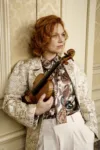
- Sophie Heinrich (violin, Germany)
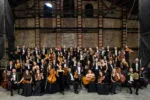
- “INSO-Lviv” Symphony Orchestra
- Paul Mann (conductor, United Kingdom)
Programme:
- Ludwig van Beethoven. Violin Concerto in D major, Op. 61 (1806)
- Jean Sibelius. Symphony No. 4 in A minor, Op. 63 (1911)
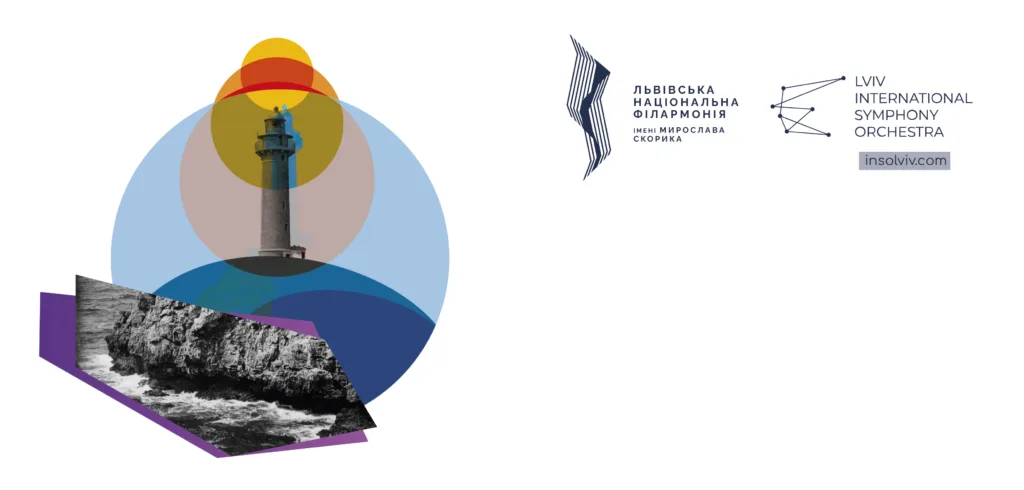
Jonathan flies not where it is safe, but where there is meaning. He chooses to venture into the unknown. This idea finds its reflection in the image of a lighthouse, a beacon that helps one keep direction amid the storm. The closing concert of the orchestra’s season explores what sustains us in times of turbulence, what shapes inner resilience, and what gives us the courage to remain faithful to our aspirations and ideals. Like a lighthouse, it cannot stop the storm or remove danger, yet it helps us stay on course even when the horizon disappears from sight.
Jean Sibelius’s Fourth Symphony is one of the most profound and enigmatic symphonies of the twentieth century. An important impulse for its creation came from the composer’s journey to Koli, the rugged hills of Karelia that have become one of Finland’s national symbols. Sibelius later recalled the “sighing of the wind and the roaring of the storm,” and it was there that the conception of a work emerged in which nature becomes a reflection of the human inner world. Following its premiere in Helsinki in 1911, audiences were bewildered: applause was restrained, and critics struggled to understand the piece. Today, however, the Fourth Symphony is regarded as one of the pinnacles of Sibelius’s artistic achievement and one of the boldest symphonic statements of the last century. Its finale does not lead to triumph or enlightenment; instead, it leaves space for questions, for an honest encounter with oneself. It is precisely in this openness that its strength resides.
Ludwig van Beethoven’s Violin Concerto unfolds as a subtle dialogue between soloist and orchestra. Its premiere took place on 23 December 1806 in Vienna. The audience failed to appreciate the new work, and after its unsuccessful first performance, the concerto disappeared from the stage for many years. More than four decades later, it was revived by the twelve-year-old violin prodigy Joseph Joachim, who performed it in London under the baton of Felix Mendelssohn. Since then, it has become one of the most beloved concertos in the repertoire.
If Sibelius’s Fourth Symphony guides us through the storm of uncertainty, Beethoven’s Violin Concerto opens a space of trust and inner freedom. There are no dramatic conflicts here; instead, there is a sense of light, balance, and harmony between humanity and the world. The conclusion of Lighthouse is a moment when, after wind and waves, a warm glow appears on the horizon. Beethoven’s music envelops us with calm, like a sea breeze at the end of the day, leaving behind the sensation of sunlight lingering on the skin. It reminds us that a true beacon does not always point the way outward; sometimes, it is illuminated within us.