
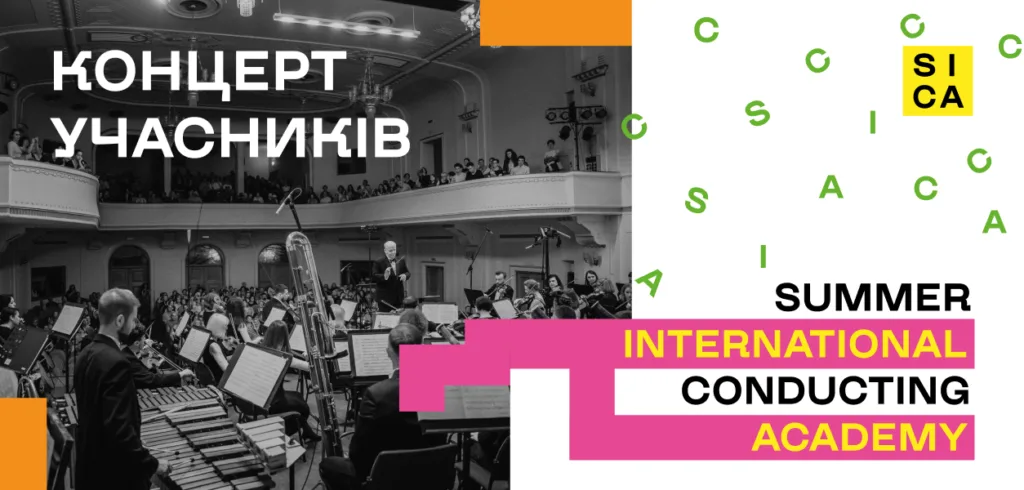
Summer International Conducting Academy. Concert of Participants
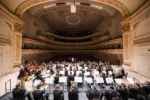
S.Lyudkevych Concert Hall
350
Performers:
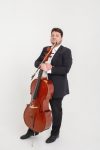
- Denys Lytvynenko, cello
- Lviv National Philharmonic Symphony Orchestra
- Giacomo Mutigli, conductor
- Kateryna Nikolenko, conductor
- Anastasiia Halizova, conductor
- Yelyzaveta Ohorodniichuk, conductor
- Hlib Fareniuk, conductor
Programme:
- Ludwig van Beethoven. Symphony No. 5, Op. 67
- Johannes Brahms. Symphony No. 2, Op. 73
- Felix Mendelssohn. Ruy Blas Overture, Op. 95
- Yevhen Stankovych. Cello Concerto No. 2
An orchestra sounds different depending on who stands in front of it. That sounds like a cliché until you hear it for yourself. The same ensemble, the same hall — and yet, ten minutes later, a completely different sound. This evening offers precisely that opportunity: five conductors will take turns leading the Academic Symphony Orchestra of the Lviv Philharmonic.
Giacomo Mutigli, Kateryna Nikolenko, Anastasiia Halizova, Yelyzaveta Ohorodniichuk and Hlib Fareniuk are participants in the all-Ukrainian masterclass for symphonic conductors, which the Lviv National Philharmonic of Myroslav Skoryk is holding for the fourth time in cooperation with the Student Scientific and Creative Society “Octopus.” The collaboration between a state cultural institution and students of Ukraine’s music universities is a first step towards an educational platform that the country still lacks: a place where conductors gain not theory, but practical experience with a live orchestra.
The mentor of the masterclass is Theodore Kuchar. The participants spend a week working on the perception of sound balance, conducting technique, the psychology of a conductor’s influence on an orchestra, and the ability to inspire musicians to create music.
The evening’s programme comprises four works.
Mendelssohn’s Ruy Blas Overture lasts seven minutes, leaving nowhere to hide. The story behind its composition deserves a mention of its own. Leipzig, March 1839: the composer was asked to write an overture and a song for a production of Victor Hugo’s play. Mendelssohn called the play disgusting and agreed only to write the song. But when someone hinted that he would not be able to write the overture in such a short time anyway, he took offence and composed it in three days. The result was brilliant and flawless, although the carefree energy of much of the work seems strangely at odds with its dark subject matter.
Yevhen Stankovych completed his Cello Concerto No. 2 in April 2016, after an almost half-century-long break from the genre. The titles of its movements — Music for Martochka, Postlude, Grandfather’s Monologue — speak for themselves.
Beethoven’s Fifth Symphony is one of those rare cases in which everyone in the hall knows the music by heart. Beethoven carries the four-note motif throughout the entire score — sometimes openly, sometimes hidden so deeply that it is felt rather than heard. And then there is the transition from the scherzo to the finale: timpani beats in the darkness, tension held at the breaking point, and an explosion of light when the entire orchestra enters.
Brahms’s Second Symphony appears to be the most tranquil work in the programme — but appearances are deceptive. Written in the summer of 1877 on the shores of Lake Wörth, it was composed at a time when Brahms wrote in a letter: “I must confess that I am a deeply melancholic person, that black wings are constantly hovering over us.” The symphony begins quietly — horns, winds, then the strings introduce a melody that grows out of three notes in the bass. In the finale, the trombones remain silent until the recapitulation, and when they finally enter, the audience hears it — and feels it physically.