
Summer International Conducting Academy Alumni
S.Lyudkevych Concert Hall
350
Performers:
- Lviv National Philharmonic Symphony Orchestra
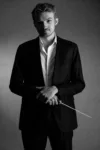
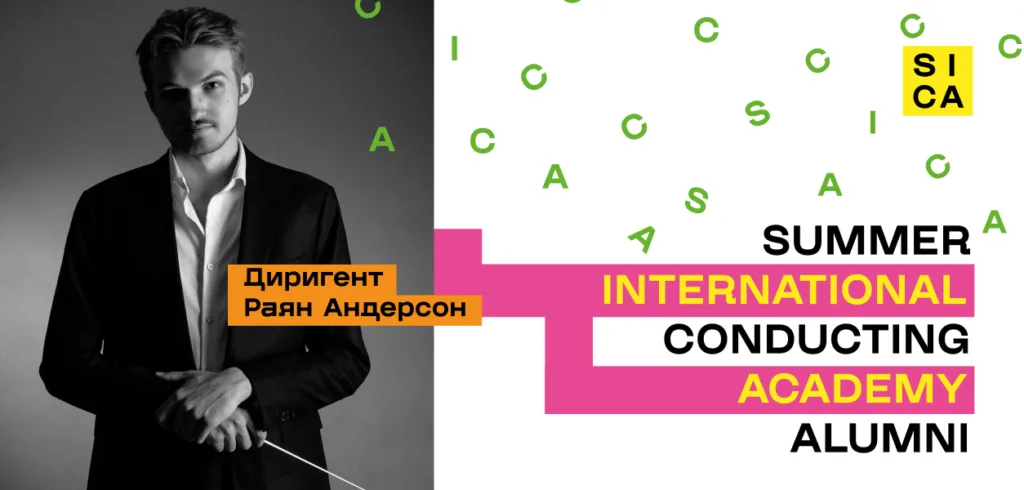
- Ryan Anderson, conductor
Programme:
- Wolfgang Amadeus Mozart. Symphony No. 25 in G minor, K. 183
- Ryan Anderson. Lament for String Symphony
- Edward Elgar. Serenade for Strings in E minor, Op. 20
- Ryan Anderson. Threnody for the Fallen Heroes
Ryan Anderson was born in the United States and describes himself as a Ukrainian conductor. This evening, he will appear before the Lviv orchestra both as a conductor and as a composer. Moreover, he wrote two of the four works on the programme himself.
Anderson is a graduate of the academy that brings young conductors to the Philharmonic every summer; among his mentors in Lviv was Theodore Kuchar. He writes minimalist music, which he himself describes as hyperrealist, incorporates non-musical objects from the material world into his scores, and searches for the sound that emerges within the walls of a sacred space.
The evening opens with Mozart’s Symphony No. 25 — Salzburg, autumn 1773, and the composer is just seventeen years old. It was his first symphony to become firmly established in the modern repertoire, and the first of his two symphonies in G minor; the second would be the famous Symphony No. 40. The Romantics loved it for its fury. Sharp, tightly compressed music, with relentless syncopations and eloquent pauses. The work begins theatrically — with a descent onto a diminished seventh, as though the curtain were rising on the stage of a storm. Mozart studied Haydn closely, and Haydn’s Symphony No. 39 in G minor most likely served as a model, notably in its use of four horns instead of the customary two.
Next in the programme is Anderson’s Lament for String Symphony.
Elgar’s Serenade for Strings in E minor was written in 1892, when the composer was not yet a professional composer in the full sense of the word: he earned his living working with various ensembles and wrote music for them.
The manuscript arrangement for piano four hands bears a dedication to his wife Alice on the third anniversary of their marriage. It consists of three movements, with the short third movement returning thematically to the first and closing the form in a circle. The marking of the first movement — Allegro piacevole, pleasant and intimate — restrains the restless melody that unfolds at the opening; it is followed by a theme full of longing, and everything flows back into a recollection of the beginning. The central Larghetto anticipates the intimate world of the later Enigma Variations: at once serene and sensual, with a dynamic range stretching from a majestic crescendo to pianissimo. The final Allegretto offers melancholy recollections of what has already been heard.
The programme concludes with Threnody for the Fallen Heroes — a threnody, a lament for the fallen.